

Breaking Down the Name: Massachusetts Institute of Technology
Let’s look at each part of the name to understand its full meaning.
Massachusetts
This refers to the U.S. state where MIT is located. MIT’s main campus is in Cambridge, Massachusetts, right across the Charles River from Boston.
Institute
Unlike traditional universities, an “institute” usually focuses more heavily on research, practical application, and specialized fields. MIT was designed from the start to be hands-on and problem-solving oriented.
Technology
This doesn’t just mean computers. At MIT, “technology” covers engineering, applied sciences, artificial intelligence, robotics, biology, physics, economics, and more.
Put together, Massachusetts Institute of Technology represents a school focused on applying knowledge to solve real-world problems.

What Does MIT Stand For?
MIT stands for Massachusetts Institute of Technology. This prestigious institution is one of the most renowned universities globally, synonymous with cutting-edge research, groundbreaking inventions, and a relentless focus on solving real-world problems through science and technology. Founded in 1861, MIT has shaped modern innovation, from the development of radar during World War II to pioneering advancements in artificial intelligence, robotics, and genomics today.
While "MIT" overwhelmingly refers to the university in academic, professional, and popular contexts, the acronym occasionally appears in other meanings (more on that later). However, when people ask "What does MIT stand for?" they almost always mean the Massachusetts Institute of Technology — a place where "mind and hand" (its Latin motto, mens et manus) come together to turn ideas into reality.


A Brief History of MIT
MIT was established on April 10, 1861, by William Barton Rogers, a visionary geologist who sought to create an institution dedicated to applied science amid America's industrial boom. Inspired by the Morrill Land-Grant Act, MIT emphasized practical education over classical studies, opening its doors in Boston in 1865 with just 15 students after the Civil War delayed classes.
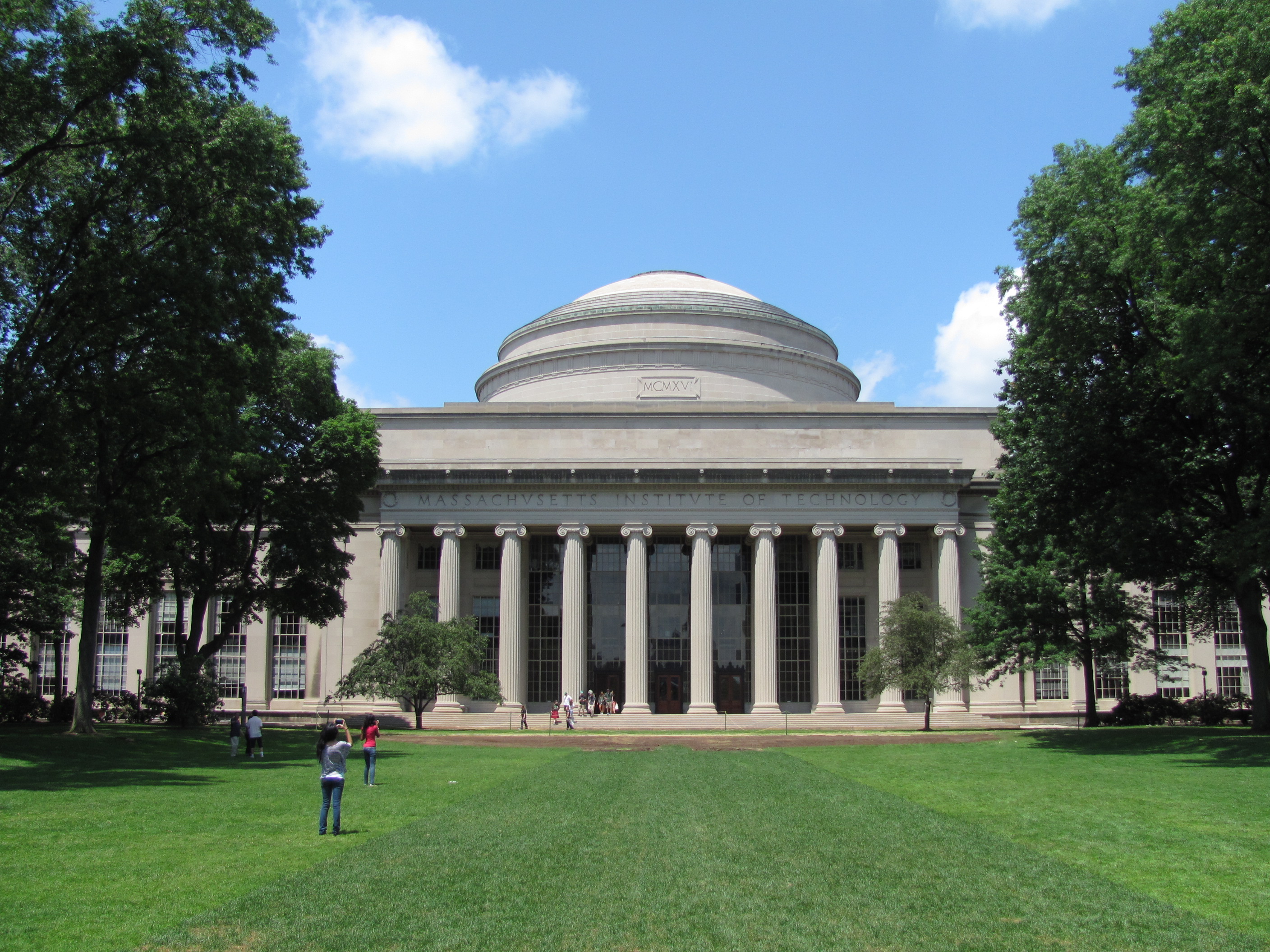
The institute grew rapidly, moving to its current Cambridge campus along the Charles River in 1916. Key milestones include WWII contributions (e.g., radar via the Radiation Laboratory), post-war expansion into pure sciences, and the launch of initiatives like OpenCourseWare (2001) and edX (2012, with Harvard). Today, under President Sally Kornbluth (appointed 2023), MIT continues to lead in AI, climate solutions, and interdisciplinary research.
The Iconic MIT Campus
MIT's 168-acre urban campus in Cambridge, Massachusetts, blends historic and modern architecture. The Great Dome atop Building 10 is an iconic landmark, often featured in student pranks (known as "hacks"). The Infinite Corridor connects buildings, while modernist structures by architects like Alvar Aalto, Eero Saarinen, I.M. Pei, and Frank Gehry dot the landscape.
The campus sits along the Charles River, with dormitories on the west and academic buildings on the east. It's home to unique facilities like MIT.nano (a nanotechnology hub), the MIT Museum, and the Nuclear Reactor Laboratory.

Academics and Programs at MIT
MIT organizes into five schools: Architecture and Planning, Engineering, Humanities, Arts, and Social Sciences (HASS), Management (Sloan School), and Science plus the Schwarzman College of Computing (established 2019). It awards only the Bachelor of Science (SB) for undergraduates, with no Latin honors or class rankings Emphasis is on mastery, not competition.
Undergraduates complete General Institute Requirements (GIRs) in science, humanities, and physical education (including a swimming test). The Undergraduate Research Opportunities Program (UROP) allows students to work on real faculty projects from day one. Graduate programs are highly selective and often fully funded.
Enrollment: ~11,900 students total (4,500+ undergraduates, 7,300+ graduates), with a 3:1 student-to-faculty ratio.
Research and Innovation Excellence
MIT is a research powerhouse, with annual expenditures exceeding $1 billion. Strengths include AI (via CSAIL and the MIT-IBM Watson AI Lab), biotechnology (Broad Institute), energy, robotics, and quantum computing. It has produced 105+ Nobel laureates affiliated with the institute, plus Turing Award winners and MacArthur Fellows.
Notable contributions: information theory (Claude Shannon), World Wide Web foundations (Tim Berners-Lee at MIT), and recent breakthroughs like 3D generative AI for robotic assembly.

Admissions: How Competitive Is It?
MIT's admissions are extremely selective. For recent classes:
- Applications: ~28,000–29,000
- Admits: ~1,300
- Acceptance rate: ~4.5–4.6%
MIT is need-blind for U.S. citizens/permanent residents and meets 100% of demonstrated need without loans. Standardized tests are required, with admitted students typically scoring in the top percentiles (SAT 1520–1570, ACT 35–36). Holistic review emphasizes creativity, impact, and a "maker" mindset—extracurriculars like building robots or coding projects stand out.
Notable Alumni and Global Impact
MIT alumni drive innovation worldwide. Examples:
- Buzz Aldrin (ScD 1963) — Apollo 11 astronaut
- Kofi Annan (SM 1972) — Former UN Secretary-General
- Esther Duflo (PhD 1999) — Economics Nobel laureate
- Tim Berners-Lee — Inventor of the World Wide Web
- Founders of Intel, Dropbox, Bose, and Akamai
Alumni have founded companies generating trillions in revenue and hold leadership roles in government, science, and industry.
Traditions and Student Life
MIT is famous for its intense academics ("drinking from a fire hose"), hacker culture, and pranks (e.g., covering the Great Dome). The Brass Rat class ring is a rite of passage. Students enjoy 500+ clubs, Division III athletics (the Beaver mascot), and residential life in diverse dorms.
Other Possible Meanings of MIT
While the university dominates, MIT can rarely refer to:
- Master of Information Technology
- Milli Istihbarat Teşkilatı (Turkish National Intelligence)
- Made in Taiwan (informal)
In tech, the MIT License is a popular open-source license. Context almost always points to the university.
FAQs
Q: What does MIT stand for in education? A: Massachusetts Institute of Technology, a top global research university.
Q: Is MIT better than Harvard? A: They excel differently—MIT in STEM, Harvard broadly. Both are elite; MIT often ranks #1 in engineering and innovation.
Q: Can anyone get into MIT? A: It's highly competitive, but strong passion for problem-solving and evidence of impact matter more than perfection.
Q: What is MIT famous for? A: Pioneering research in AI, robotics, computing, and science that shapes the world.
Q: Where is MIT located? A: Cambridge, Massachusetts, across the Charles River from Boston.

Explore, Discover and Unlock the next level of financial possibility Dive in
Conclusion
MIT stands for Massachusetts Institute of Technology—but it represents far more: a culture of ingenuity, collaboration, and bold ideas that have transformed society. Whether you're a prospective student, researcher, or simply curious, MIT embodies the power of combining mind and hand to build a better future.